Everything the engine was given
One form, two screenshots, one command. This is the entire human contribution to the run.
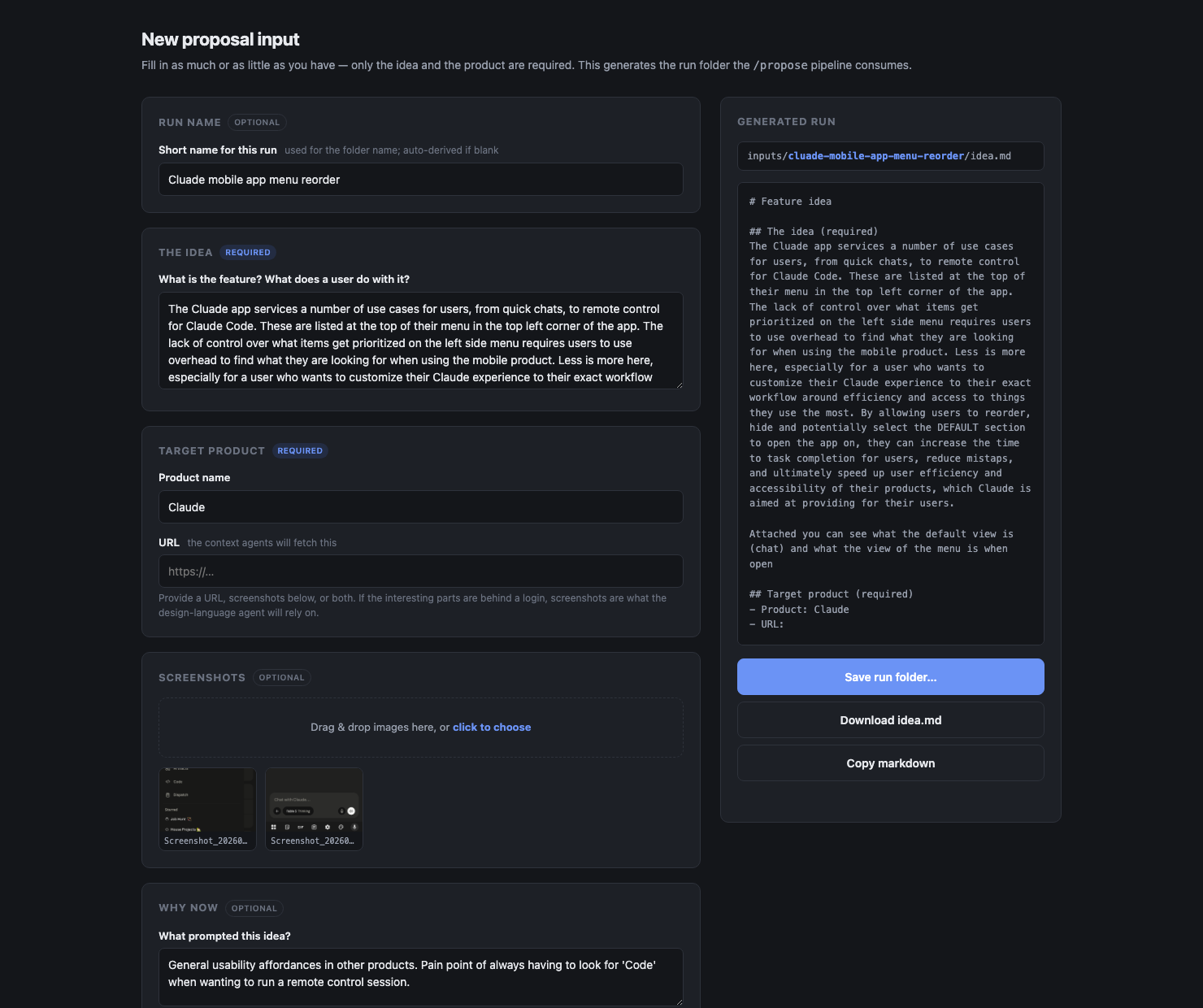
The intake form, as I submitted it
The engine's front door is a local form that writes a run folder. Below is this run's form with exactly what I typed, typos included ("Cluade" is mine). The right-hand pane shows the idea.md it generates live.
The two screenshots I uploaded
the only visual evidence the agents got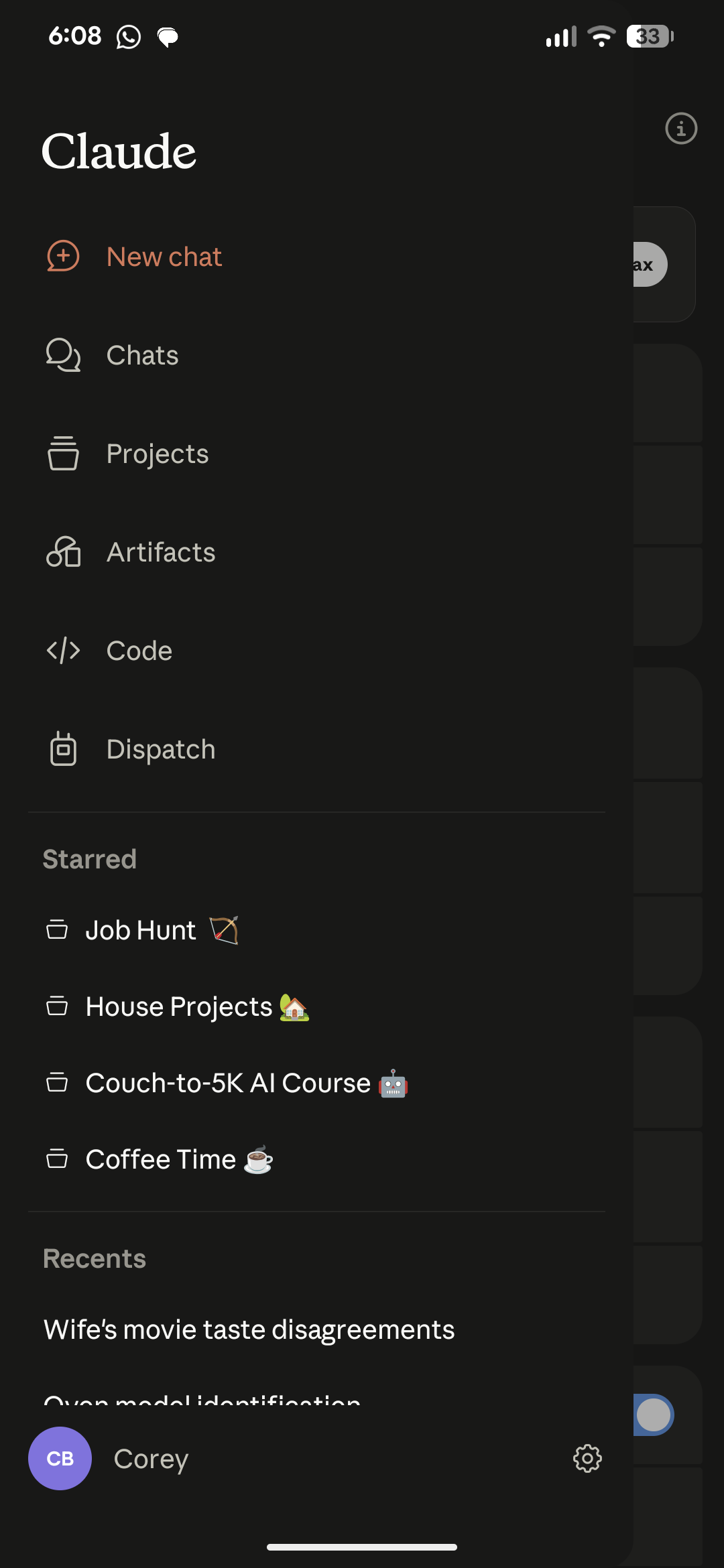
Screenshot_20260713-180822.pngThe drawer. Code sits 5th, Dispatch 6th.
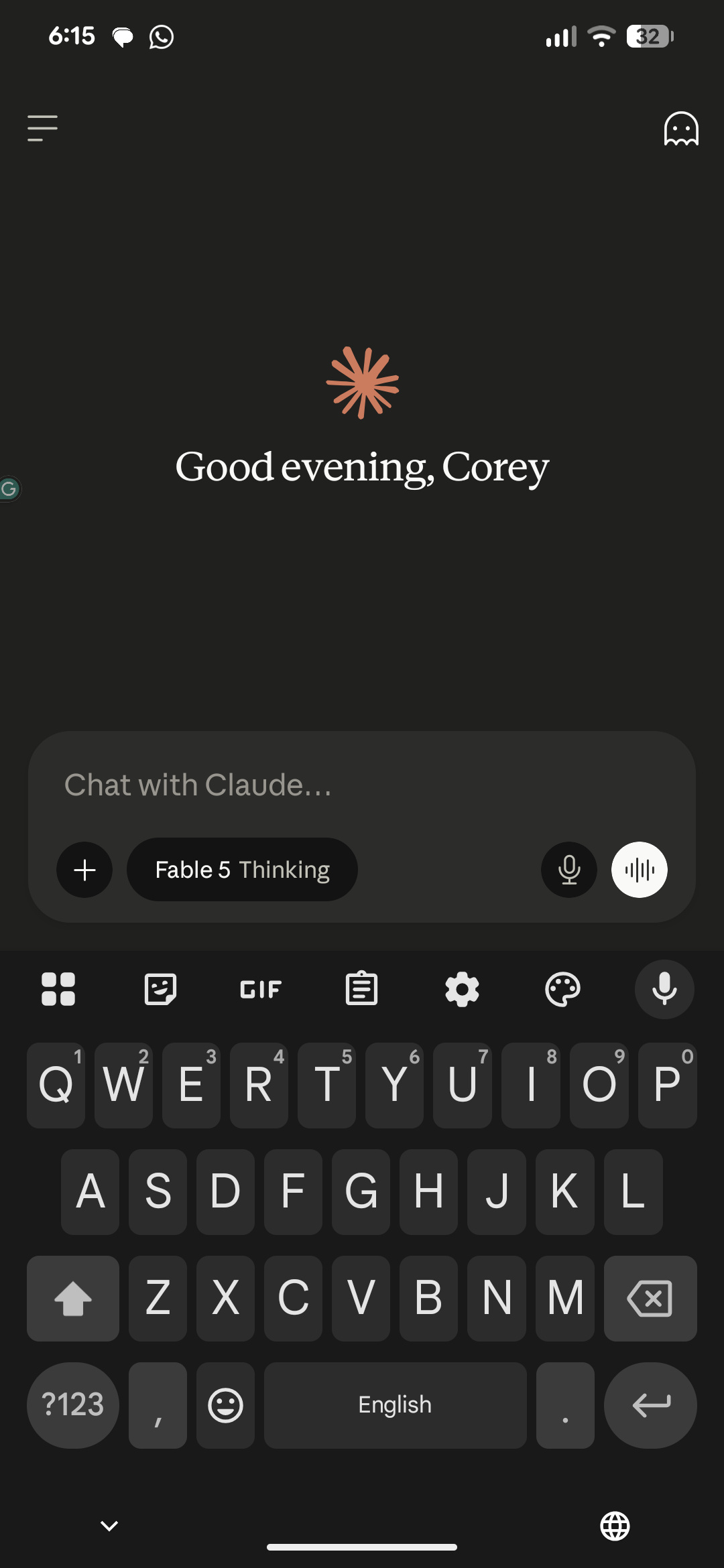
Screenshot_20260713-181535.pngThe chat home the app always opens to.
What landed on disk
"Save run folder" wrote this input folder. That is the entire specification the pipeline starts from.
inputs/cluade-mobile-app-menu-reorder/
├─ idea.mdthe two paragraphs above, plus "why now" and constraints24 lines
└─ screenshots/the two PNGs above2 files
Then one command in Claude Code, from the engine's repo:
$ /propose inputs/cluade-mobile-app-menu-reorder
From here the pipeline runs its five stages in a fixed order: context, discovery, definition, risk sweep, synthesis. Every artifact in the rest of this walkthrough was written by an agent during that run and is shown unedited.